Rigorous Gas Piping Standards in Williamsbridge Buildings
Natural gas powers essential building systems throughout Williamsbridge and Olinville, supplying fuel to steam boilers, hydronic heating systems, domestic water heaters, commercial laundromats, and residential kitchen ranges. Because fuel gas is pressurized and combustible, natural gas systems require absolute mechanical integrity, precision joint fitting, and uncompromised adherence to New York City Department of Buildings (DOB) plumbing codes.
Whether you are addressing utility lock-offs following a meter shutoff, repairing aged black iron pipe corrosion in a cellar, connecting a newly renovated commercial range, or preparing multi-family buildings for periodic compliance reviews, our team provides licensed, professional gas piping solutions engineered for lasting safety.
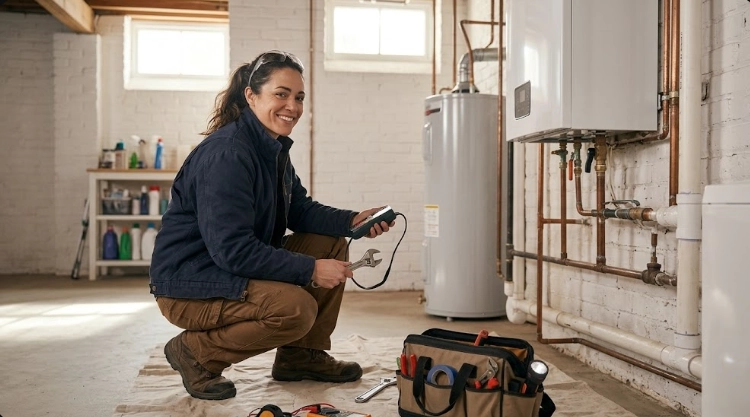
Calibrated digital manometers and certified pressure testing gauges verifying zero-leak gas-tight integrity across Bronx residential gas manifolds.
Signs Your Gas Piping Requires Professional Inspection
Aside from active utility emergency evacuations, structural and mechanical gas piping issues often manifest over time. Call for a professional evaluation if you observe:
- Visible Surface Rust & Flaking on Black Iron Pipes: Cellar dampness, water leaks, or humid crawlspaces accelerate oxidation on unpainted steel gas piping, weakening wall thickness.
- Faint or Intermittent Odors Near Meter Banks: Slight mercaptan odors near basement utility meters or manifold valves suggest microscopic joint seepage or dried-out pipe dope.
- Appliance Burner Malfunctions: Yellow, weak, or fluttering flames on stoves and water heater burners indicate incorrect line pressure, soot restrictions, or undersized supply lines.
- Physical Impact or Unsupported Sagging Lines: Vibrations, dislodged pipe hangers, or accidental bumps from basement storage can stress threaded fittings and union joints.
- Con Edison or DOB Red-Tag Shutoffs: If the gas utility locks off your service meter following a routine inspection, licensed testing and permitted repairs are required before gas can be legally restored.
Utility Lock-Off or Restoration Needed?
We work directly with NYC DOB filing procedures and utility restoration requirements to test, repair, and restore gas services safely.
Call (315) 202-8009Comprehensive Diagnostic Testing & Pressure Verification
Resolving gas piping issues requires rigorous diagnostic protocols. We never guess at the location of suspected joint leaks:
- Electronic Combustible Gas Sniffers
- Sensitive handheld catalytic sensors detect parts-per-million concentrations of natural gas, allowing technicians to trace faint odors along concealed pipe runs, unions, and appliance shutoff valves.
- High-Precision Pressure Integrity Tests
- To prove complete piping integrity, the gas system is isolated from appliances and meters. Technicians pump inert air or nitrogen into the pipe line and monitor a calibrated test gauge. The piping must hold specified pressure (often 3 to 15 PSI depending on NYC code test class) for a designated test window without any pressure loss.
- Micro-Leak Bubble Solutions
- Non-corrosive surfactant solutions applied directly to suspect threaded fittings, elbows, valves, and regulator diaphragms generate visible micro-bubbles at the exact point of air leakage.
NYC Local Law 152 Gas Piping Inspections
Under NYC Local Law 152 of 2016, all buildings classified as occupancy group R-2 (properties containing more than two residential units, such as three-family dwellings, apartment buildings, and co-ops) must undergo an inspection of their exposed gas piping system once every four years.
Inspections must be conducted by a qualified Licensed Master Plumber or under their direct supervision according to borough-specific reporting cycles. The survey reviews exposed piping from point of entry, meter banks, boiler rooms, and common corridors, looking for excessive corrosion, illegal connections, missing shutoff valves, or gas leaks. We assist Williamsbridge property owners with required LL152 evaluations, remediation of observed defects, and official certification submissions to the NYC Department of Buildings.
Gas Appliance Connections & Dedicated Line Installations
Installing modern high-output gas equipment requires precision sizing and dedicated line routing:
- Heating Boilers & Water Heaters: New condensing boilers and high-recovery water heaters require correct BTU capacity delivery. Undersized gas lines cause fuel starvation, noisy combustion, and premature component wear.
- Commercial & Residential Kitchen Ranges: We install rigid black steel drops, commercial flex connectors, and emergency quarter-turn ball valves complying with NYC mechanical clearance regulations.
- Gas Clothes Dryers: Safe installation includes verified shutoff access, approved sediment traps (drip legs), and leak-checked flare connections.
Related Services for Williamsbridge Buildings
Fuel delivery systems connect directly to heating and domestic hot water infrastructure throughout your building:
Water Heater Repair
Service for gas burner assemblies, thermocouple safety switches, venting flues, and storage tanks.
Boiler Replacement
Complete gas boiler upgrades, oil-to-gas conversions, and high-efficiency hydronic installations.
Steam Heat & Radiator Repair
Optimizing steam delivery, balancing radiator valves, and silencing noisy steam lines.
Frequently Asked Questions About Gas Line Repair & Inspection
Evacuate everyone from the building immediately. Do not operate light switches, touch electrical appliances, ring doorbells, or use indoor phones, as an electrical spark can ignite gas vapors. Once outside and at a safe distance, immediately dial 911 or call your gas utility emergency hotline (Con Edison: 1-800-75-CONED).
Local Law 152 mandates periodic gas piping system inspections for buildings across New York City containing more than two residential units (Class R-2) and commercial structures. Inspections must be conducted by a qualified Licensed Master Plumber or under their direct supervision, checking exposed gas piping from the building entrance to tenant spaces for corrosion, leaks, and non-compliant conditions.
Plumbers employ combustible gas leak detectors, calibrated bubble solutions, and high-precision pressure tests. The system is isolated, pressurized with inert nitrogen or air, and monitored with an accurate mercury or digital test gauge to confirm absolute pressure retention before utility restoration.
No. New York City construction and plumbing codes strictly require all gas piping modifications, appliance connections, and shut-off valve replacements to be performed by licensed professionals. Work must adhere to stringent NYC DOB safety regulations to ensure proper ventilation, fire clearances, and gas-tight joint integrity.