Basement Flooding and Water Management in Williamsbridge
Williamsbridge, Olinville, and neighborhoods neighboring the Bronx River corridor experience significant hydrostatic pressure following heavy rain events, rapid snowmelt, and intense summer cloudbursts. Many local residential homes feature sub-grade basements that house essential utilities—including heating boilers, water heaters, electrical panels, and finished living quarters. When groundwater saturates the soil perimeter, water forces its way through foundation seams, floor slabs, and masonry cove joints unless guarded by an active, well-maintained dewatering system.
Our focus is on delivering comprehensive flood prevention engineering. Whether you require an urgent diagnostic repair on a failing submersible pump, a secondary battery backup upgrade, or backwater valve protection against overloaded municipal storm lines, we provide dependable, code-compliant plumbing solutions tailored to Bronx properties.
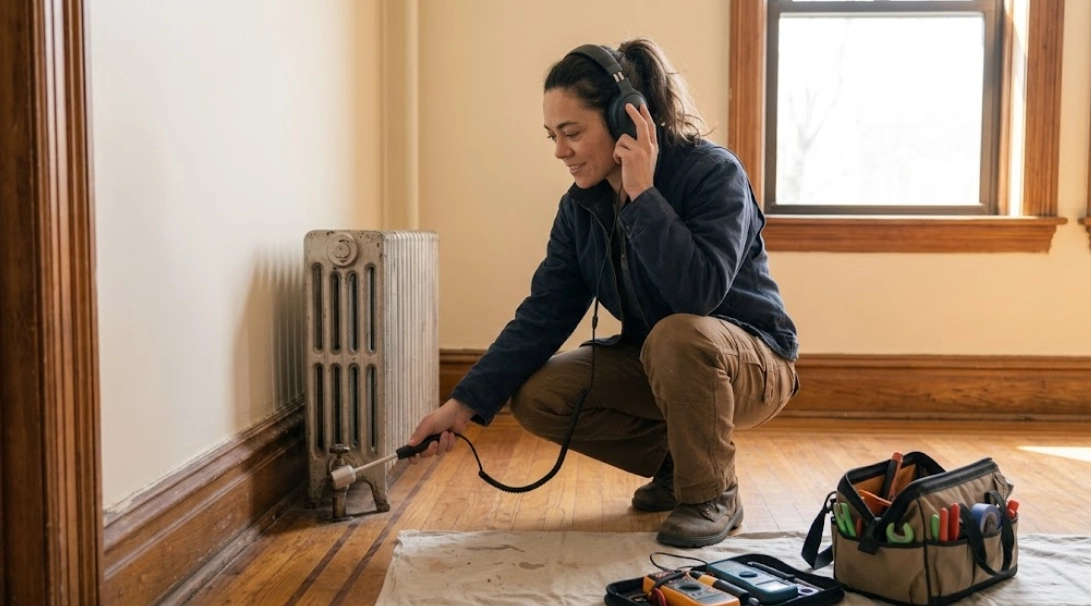
Locating concealed foundation moisture and evaluating sump basin discharge lines to safeguard Bronx basements from storm water damage.
Warning Signs of Impending Sump Pump Failure
A sump pump that fails during a calm afternoon creates little disruption; a pump that fails during a heavy torrential downpour creates tens of thousands of dollars in property loss. Watch for these crucial warning signs:
- Continuous Motor Running: If the pump hums endlessly even after water levels in the crock have dropped below the intake screen, the float switch may be stuck or the check valve may be leaking back into the pit.
- Unusual Mechanical Grinding or Screeching: Foreign pebbles, sand, or worn motor bearings cause loud metallic rattles, indicating impending motor seizure.
- Basement Dampness or Standing Water: Water accumulating around the basin rim or foundation perimeters indicates the pump cannot keep pace with incoming water volume or has tripped its circuit.
- Vibrating Discharge Pipes: Excessive vibration during pump discharge cycles stresses PVC joints and can cause the discharge line to separate inside the basement.
- Failure to Activate When Flooded: If water rises above the float mechanism and the pump fails to start, the electrical motor, switch relay, or GFCI outlet requires immediate professional evaluation.
Heavy Rains in the Forecast? Test Your Pump Today
Ensure your basement dewatering system is fully operational before flash flood alerts hit the Bronx. Call NY Plumbing to inspect your pit, pump, and backup batteries.
Call (315) 202-8009Key Components of a Robust Sump Pump System
A high-reliability basement dewatering setup relies on balanced mechanical components operating seamlessly under severe load:
- Submersible Cast-Iron Pumps vs. Pedestal Units
- Submersible pumps are housed directly inside the basin underwater. Featuring cast-iron volutes and oil-cooled motors, they dissipate heat efficiently during hours of continuous operation, produce minimal noise, and handle small suspended solids much better than older pedestal models.
- Reliable Vertical and Dual-Float Switches
- Tethered float switches often drift and become wedged against basin walls or discharge pipes, preventing the pump from turning on or off. We install commercial-grade vertical magnetic or dual-microswitch floats that travel cleanly on guide rods, virtually eliminating switch hang-ups.
- Spring-Loaded Quiet Check Valves
- A check valve prevents water remaining in the vertical discharge column from falling back into the pit when the pump cycles off. Modern spring-loaded quiet check valves eliminate the jarring "water hammer" clunk typical of standard gravity flappers, reducing strain on pipe fittings.
- Exterior Discharge Line Routing & Freeze Protection
- Discharge lines must direct water safely away from the foundation wall to prevent evacuated water from immediately recycling back into the footing tiles. We ensure discharge pipes maintain proper downward pitch and incorporate freeze-relief escape points to avoid winter freeze blockages.
Battery Backup Systems & Their Operational Limits
Electrical outages frequently coincide with the worst weather conditions in the Bronx. High winds knock down utility branches, cutting household power precisely when groundwater ingress peaks. A standalone 120V primary pump cannot run without electricity.
We install secondary DC battery backup pump systems mounted just above the primary pump in the same basin. If the primary pump loses power or suffers mechanical failure, water rises slightly higher to engage the auxiliary backup switch. High-capacity deep-cycle marine AGM batteries power a secondary pump capable of pumping thousands of gallons over prolonged outages. We also guide homeowners on battery maintenance schedules, trickle charging controllers, and realistic operational run-times.
Backwater Valves: Stopping City Sewer Backups
Groundwater seep isn't the only flooding risk facing Williamsbridge and Olinville properties. During extreme deluges, municipal combined sewers beneath street roads can become over-pressurized. When street pipes reach capacity, city wastewater seeks relief by surging backward into low-elevation residential basement fixtures.
A mainline backwater valve (or backflow prevention flap) installed on your private sewer drain provides essential mechanical defense. Under normal conditions, home wastewater flows freely through an open gateway. When municipal pressure forces water backwards, an internal gate floats up and locks tightly shut, sealing your home’s interior plumbing against exterior sewage intrusion.
Preventive Maintenance and Pre-Storm Checklist
Simple preventive routines protect your property from sudden dewatering failures:
- Bucket Pour Test: Pour 5 gallons of water into the crock every three months to verify instant float switch response and smooth discharge.
- Pit Debris Clearance: Clear out accumulated silt, gravel, laundry lint, and construction dust from the bottom of the basin so the impeller intake screen remains unobstructed.
- Battery Status Check: Verify that the backup charging unit displays a green ready light and that terminal terminals are free of corrosion.
- Weep Hole Inspection: Ensure the tiny air-relief hole drilled between the pump and check valve is free of sediment to prevent air locks.
Interconnected Plumbing Services
Comprehensive flood protection works alongside full-system building plumbing. Review our additional services:
Sewer Line Repair
Underground pipe inspections, root removal, and lateral replacements to maintain flawless main drain capacity.
Drain Cleaning
Heavy-duty clearing of floor drains, perimeter channels, and storm leaders to prevent standing water.
Water Heater Repair
Protect and service basement water heating equipment from moisture damage and mechanical burner faults.
Frequently Asked Questions About Sump Pump Systems
Most submersible primary sump pumps operate reliably for roughly 7 to 10 years, depending on water table frequency, run cycles, and water mineral content. If your pump hums without clearing water, makes grinding mechanical sounds, or cycles constantly during dry spells, replacement should be scheduled before major storms.
Severe coastal and seasonal storms frequently knock out electrical power at the exact moment groundwater pressure reaches peak levels. A battery backup system operates automatically on DC power or dedicated inverter batteries when the electrical grid drops, preventing catastrophic basement flooding.
A sump pump evacuates groundwater that collects around the building foundation via weeping tiles and pit basins. A backwater valve is a mechanical flapper installed on the building’s main sanitary sewer drain that automatically closes if city sewer mains become overloaded, blocking street sewage from pushing backwards into basement drains.
Property owners should pour a five-gallon bucket of water into the sump basin at least twice a year—especially before spring thaw and autumn hurricane seasons—to confirm the float switch activates freely, the impeller evacuates water quickly, and the check valve snaps shut without slamming.