Underground Sewer Line Challenges in Williamsbridge Properties
When residential drains begin to back up simultaneously throughout a home, the root cause rarely sits within an individual sink or fixture trap. In Williamsbridge and Olinville, many private residences, multi-family homes, and mixed-use buildings rely on sewer laterals that have been in continuous service for fifty to nearly one hundred years. When these underground pipelines deteriorate, wastewater loses its clear gravity passage to the municipal sewer, forcing hazardous blackwater back into basement tubs, floor drains, and utility rooms.
Identifying whether an issue stems from a routine blockage or structural pipe failure requires experienced diagnostics. Our technical team evaluates underground lateral integrity to pinpoint the precise depth, material condition, and obstruction type, ensuring homeowners in Williamsbridge, Bronx receive targeted, lasting solutions rather than temporary surface clears.
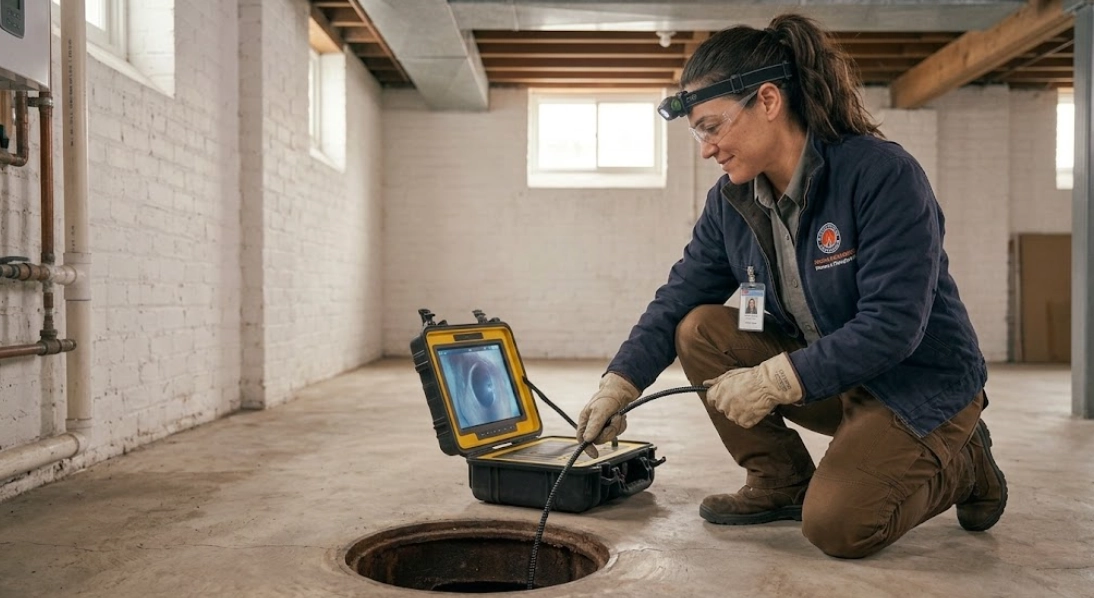
High-definition fiber-optic sewer camera inspections pinpoint hidden root intrusions, cracks, and pipe offsets beneath Bronx yards and building foundations.
Signs of Main Sewer Line Failure
Main sewer line defects often start with subtle warning signs before causing a total property shutdown. Recognizing these symptoms early allows property owners to arrange an evaluation before raw sewage causes severe property damage:
- Multiple Fixtures Backing Up Simultaneously: Running a washing machine on the first floor causes water to bubble up in the basement slop sink or shower stall.
- Sewer Gas Odors in Basements or Foundation Walls: Cracked underground pipes allow hydrogen sulfide and methane gases to escape into sub-grade crawlspaces and cellar floors.
- Gurgling Fixtures: Air trapped behind a major underground obstruction bubbles back through toilet bowls and sink traps whenever wastewater discharges.
- Basement Floor Drain Flooding: Wastewater surfacing at the lowest plumbing point in the building indicates that the main house drain is blocked or structurally impaired.
- Lush Green Patches or Sinkholes in Lawns: When a buried clay or cast-iron sewer lateral splits open, escaping nutrient-rich water softens topsoil and accelerates lawn growth above the break.
Urgent Sewer Backup? Speak Directly With a Plumber
Don't allow hazardous wastewater to damage your basement or electrical panels. We evaluate sewer line emergencies across Williamsbridge and nearby neighborhoods promptly.
Call (315) 202-8009Common Causes of Sewer Line Damage in Older Bronx Neighborhoods
Williamsbridge homes—particularly along avenues near White Plains Road, Gun Hill Road, and the residential tree-lined streets toward Olinville—face distinct environmental and infrastructure conditions:
- Vitrified Clay Pipe Deterioration & Joint Separation
- Clay pipes were the standard for house laterals built through the mid-20th century. While clay resists corrosion, the mortar joints between pipe sections degrade over decades. Mature street trees send microscopic root tendrils into these hairline gaps in search of moisture. Inside the warm, nutrient-packed pipe, roots expand into dense root masses that shatter the clay hubs.
- Cast-Iron Bottom Channel Channeling
- Cast-iron house drains under basements and front yards suffer from bottom-channel channeling. Decades of acidic household waste erode the base of the pipe until a trench opens along the bottom, allowing water to saturate sub-base soil while catching solid debris on jagged metallic edges.
- Ground Shifting and Soil Settlement
- Seasonal freezing and thawing cycles in the Northeast, combined with heavy roadway traffic and utility excavations, cause ground settling. When soil shifts underneath rigid clay laterals, sections shear off, creating severe offsets where waste cannot pass.
High-Definition Sewer Camera Inspections
Guesswork has no place in modern sewer lateral diagnosis. A high-definition, self-leveling sewer camera inspection is the primary diagnostic standard. We introduce a flexible fiber-optic camera through the main building cleanout, transmitting real-time, high-resolution video directly to an external monitor.
The camera reveals the exact interior condition of the line: identifying root intrusion severity, grease scale buildup, sheared pipe joints, structural collapses, or belly sags where standing water collects. Integrated sonde radio transmitters allow us to locate the camera head from above ground, marking the exact depth and spot on your lawn or driveway where repairs are required.
Spot Repair vs. Complete Lateral Replacement
Not every sewer problem requires digging up the entire front yard or sidewalk. Once video inspection reveals the structural condition, we determine the most practical and cost-effective approach:
- Targeted Spot Repair: When camera diagnostics verify that 90% of the sewer line remains structurally sound and the failure is isolated to a single broken hub or localized root intrusion, an excavated spot repair replaces only that compromised 6-to-10 foot section with durable modern PVC, tied in with heavy-duty shielded mechanical couplings.
- Complete Lateral Replacement: When the pipe shows widespread structural degradation—such as long fractures, continuous root penetration across multiple joints, or severe channel rot—spot repairs merely postpone an inevitable collapse. Full replacement installs a new, continuous, code-compliant sewer lateral engineered for decades of trouble-free flow.
NYC Property Owner Responsibilities & The Municipal Main
In New York City, property owners frequently ask where their legal maintenance responsibility ends. Under NYC Department of Environmental Protection (DEP) regulations, property owners are responsible for the entire private sewer connection (the house sewer lateral) running from the foundation wall out to the spur connection on the municipal sewer main in the street.
If a collapse occurs beneath the sidewalk or roadway in your private house line, it remains the building owner’s responsibility to repair it according to NYC plumbing and street opening permit requirements. Our diagnostic inspections verify whether the issue is situated on your private property, within the public street right-of-way, or originating from a backed-up city municipal main.
Related Services for Williamsbridge Property Owners
Maintaining overall plumbing system health often involves addressing interconnected drainage and water management systems. In addition to sewer lateral repairs, consider these vital services:
Drain Cleaning
Professional heavy-duty snaking and mechanical clearing for localized kitchen, bathroom, and basement fixture clogs before they escalate.
Sump Pump & Flood Protection
Protect lower levels and mechanical rooms from groundwater infiltration and storm backups with dual-pump systems and backwater valves.
Boiler Replacement
Ensure reliable steam and hydronic heating for your home with precision-sized modern boiler installations.
Frequently Asked Questions About Sewer Line Repair
A standard fixture clog usually affects only one drain, such as a single sink or toilet. A broken, collapsed, or severely root-choked main sewer line causes multiple fixtures across the lowest floor or basement to back up simultaneously, often accompanied by recurring gurgling sounds, wastewater bubbling out of basement floor drains, and persistent sewer gas odors.
In New York City, property owners are generally responsible for maintaining and repairing the entire private house sewer line from the foundation of the building all the way out to its connection at the municipal sewer main under the street. An accurate camera inspection clarifies where the defect lies before any excavation begins.
Many residential buildings in Williamsbridge and Olinville were constructed with vitrified clay or cast-iron sewer lines. Over decades, tree root intrusion wedges open mortar joints, shifting soil fractures clay barrels, and acidic wastewater causes cast-iron bottoms to corrode through, leading to structural collapse.
Yes, depending on what the sewer camera inspection reveals. If a localized root breach or isolated pipe crack is confined to a single section, a targeted spot repair can restore structural flow without trenching the entire lateral span.